Simaisma Smart City
Qatar
Designing a Connected Coastal Destination at Simaisma
A smart city framework that links tourism, communities, and infrastructure through scalable digital and data platforms.
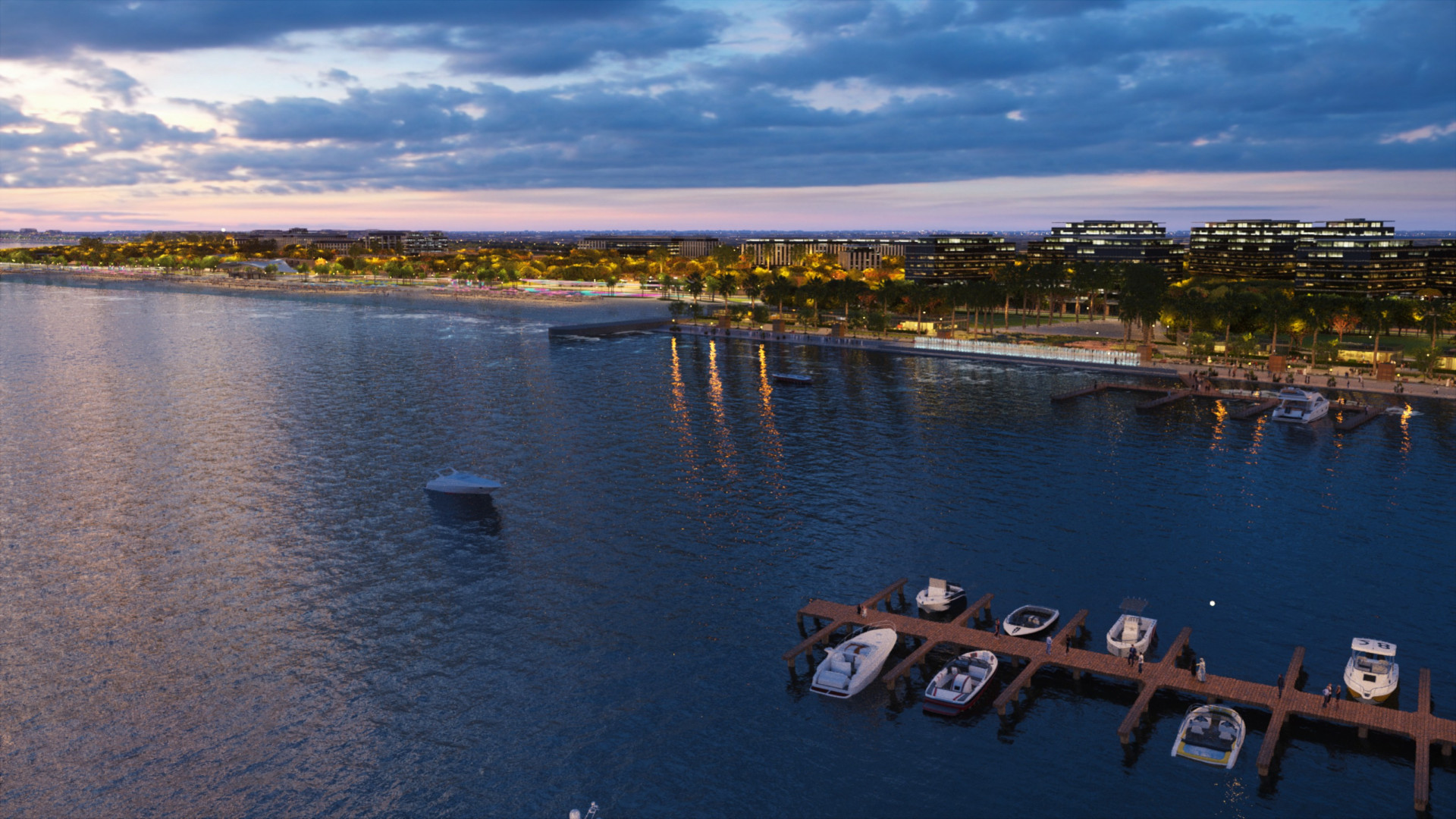
Simaisma is a visionary 8 million m2 beachfront development located roughly 40 km north of Doha, along a 7 km reclaimed public shoreline, planned as a mixed-use destination combining resorts, residential neighbourhoods, public beaches, and leisure facilities. Positioned within Qatar National Vision 2030, the project is expected to demonstrate how smart and sustainable infrastructure can support tourism, liveability, and economic diversification in a single integrated community.
The client’s ambition went well beyond deploying isolated “smart” features. Simaisma needed to function as a connected urban ecosystem where mobility, utilities, buildings, and digital services work together to enhance quality of life, optimise resource use, and protect the sensitive coastal environment. At the same time, the development had to remain financially viable, operationally manageable, and compatible with national regulations and utility standards.
We were engaged to define how smart city, digital, and data infrastructure should be planned from the outset, what to build, in what sequence, and on which enabling platforms. The core challenge was to turn a broad smart city ambition into a focused, prioritised roadmap that could guide design, procurement, and operations over multiple delivery phases.
Our Approach
We developed a smart city strategy and roadmap for Simaisma grounded in clear outcomes, structured frameworks, and implementation realities rather than starting from specific technologies.
We began by aligning Simaisma’s aspirations with Qatar National Vision 2030 and the client’s goals around tourism, sustainability, and community experience. These ambitions were translated into eight SMART themes, People, Economy, Environment, Governance, Living, Mobility, Construction, and Operation, drawing on international smart city standards and best practice. The themes ensured that every smart intervention could be traced back to a policy or development objective, not just to a device or system.
To position Simaisma against its peers, the team carried out regional and international benchmarking, focusing on smart, innovative solutions and technologies that could be realistically adapted and implemented in the Simaisma context.
Building on this foundation, we developed a Smart Services framework spanning the eight themes. In total, 33 initiatives were defined, ranging from guest-facing services such as mobile check-in, digital concierge, and social event integration to city-scale systems including smart energy and water, intelligent street lighting, dynamic parking management, EV charging, digital twins, smart waste management, and AI-driven security and surveillance. For each initiative, the team articulated design intent, key functionalities, enabling technologies, and dependencies on infrastructure and data.

Recognising that not all initiatives could be delivered at once, a prioritisation framework was introduced. Each initiative was evaluated through a multi-criteria assessment considering maturity, deployment complexity, sustainability contribution, user experience, and cost. This standards-informed approach generated an overall readiness and impact rating, allowing the portfolio to be organised into “must-have”, “should-have”, and “could-have” groups and providing a transparent basis for investment decisions and stakeholder alignment
In parallel, the team defined the enabling foundations that would make the portfolio deliverable:
- A Smart City Integrated Platform (SCIP) concept, describing how data from meters, sensors, building systems, and applications would be collected, normalised, and exposed via standard APIs for analytics, dashboards, and digital twins.
- A cybersecurity vision and requirements framework covering IoT and OT assets, cloud services, data governance, and identity and access management, ensuring security-by-design across the ecosystem.
- A governance and operating model setting out roles for the city owner, operators, and partners; decision-making processes; and mechanisms for performance monitoring and continuous improvement.
- Smart building and district integration guidelines to ensure that future technologies and IoT deployments across plots can connect back to the city platform without costly retrofits.
Together, these elements were assembled into a phased smart city roadmap aligned with the physical development program.
Results
The engagement translated a high-level vision into a coherent, human-centred smart city blueprint for a new coastal destination. Its value can be seen across four dimensions:
- A shared vision for a smart coastal community
The work established a clear smart vision and a set of planning principles that connect national ambitions with everyday experiences on the ground. Rather than treating “smart” as an add-on, the strategy clarified how digital infrastructure should support guest experience, resident comfort, and environmental stewardship across the entire 480-hectare site. This gave planners, designers, and operators a common language and direction for decision-making. - A focused portfolio of initiatives that matter most
By structuring 33 initiatives into a prioritised portfolio, the strategy moved Simaisma from abstract aspirations to a practical delivery agenda. The multi-criteria assessment surfaced a core set of must-have use cases for early implementation, each tied to specific user journeys and operational outcomes. This allows investments to be channelled into interventions that deliver visible value for residents, visitors, and operators from day one. - A scalable digital and governance backbone
The definition of the SCIP, cybersecurity requirements, and governance and operating model ensures that individual systems will not evolve in isolation. Instead, Simaisma now has a modular digital architecture that can integrate new buildings, districts, and services over time while maintaining security, interoperability, and data quality. This reduces long-term integration risk and protects the client’s ability to adopt future technologies at reasonable cost. - A repeatable model for blending technology and place-making
Beyond the project boundary, the work provides a reference model for how smart services, data infrastructure, and human-centred design can be developed together for coastal destinations. By treating user journeys, operational needs, and sustainability targets as the starting point, and then shaping technology around them, the strategy positions Simaisma not only as a new tourism destination, but as a resilient, insight-driven community capable of sustaining performance and quality of life over the long term.